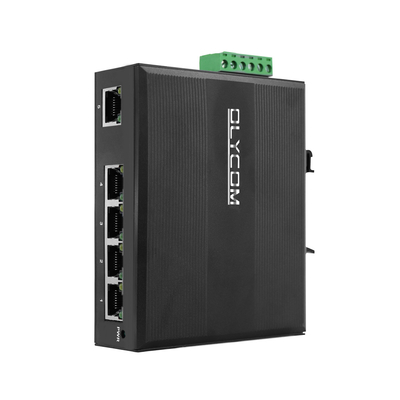
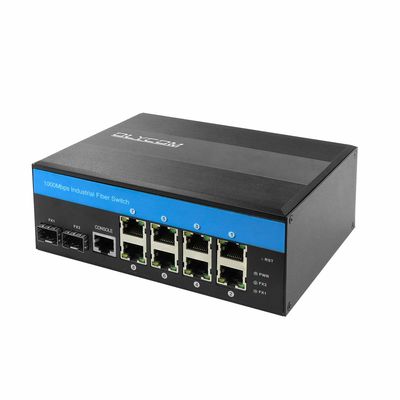
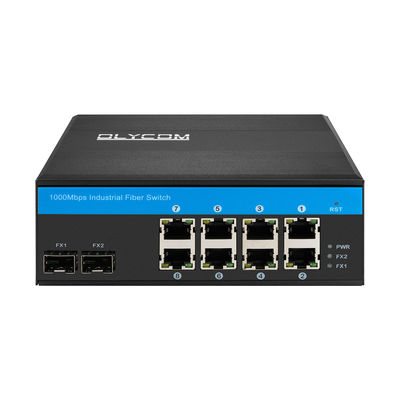
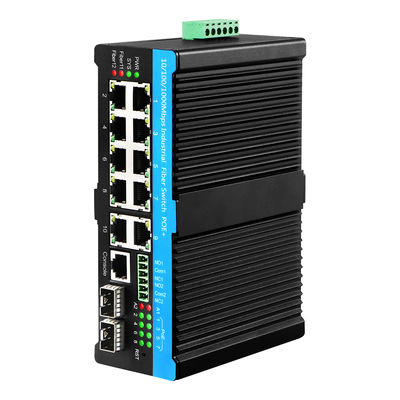
16-Port-Unmanaged-Rugged-PoE-Ethernet-Schalter
1Was ist das?
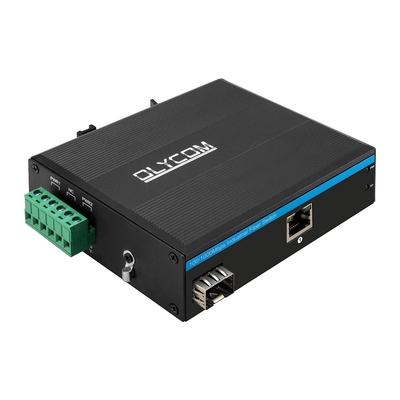
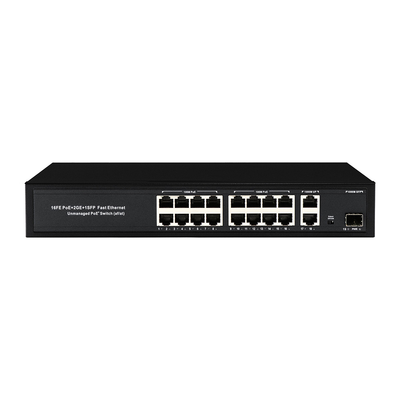
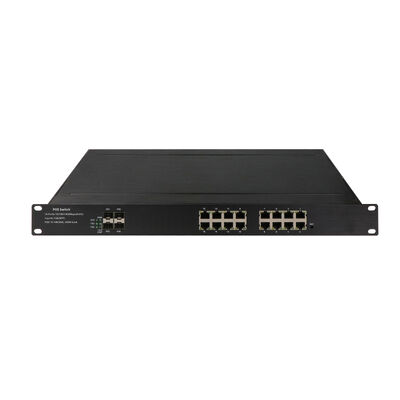
Der IM-FP041616GE ist ein nicht verwalteter industrieller PoE Ethernet-Switch, der für Umgebungen entwickelt wurde, in denen Einfachheit, Haltbarkeit und unterbrechungsfreier Betrieb wichtiger sind als Konfigurationsflexibilität.
Es ist so konzipiert, dass es ohne Software-Setup, ohne Netzwerk-Tuning, ohne Management-Overhead funktioniert.
Einmal eingeschaltet, liefert es sofort Datenverbindung und PoE-Leistung an angeschlossene Geräte.
Dadurch eignet es sich für Industrieanlagen, in denen die IT-Kenntnisse vor Ort begrenzt sind oder bei denen die langfristige Wartung minimiert werden muss.
Der Switch fungiert als industrieller Infrastrukturknotenpunkt mit fester Funktion, nicht als konfigurierbarer Netzwerkcontroller.
|
Produktbezeichnung
|
10/100/1000Mbps Industrieller POE-Faserschalter (4F+16TP)
|
|
Modell Nr.
|
Die Daten werden in der Liste aufgeführt.
|
|
Hafen
|
4 x 1000Mpbs SFP-Anschlüsse
16x10/100/1000M UTP RJ45
|
|
Standards
|
Ich habe eine IEEE 802.3, IEEE802.3U, IEEE802.3ab, IEEE802.3z, IEEE802.1d STP, IEEE802.1w RSTP, IEEE802.1s MSTP, ITU-T G.8023 EPR/Y1344, IEEE802.1Q, IEEE802.1X, IEEE802.3ad, IEEE802.3x, IEEE802.3af, IEEE802.3at, IEEE802.1ad, IEEE802.1p,
IEEE802.1ab, IEEE802.3az
|
|
VLAND-ID
|
4096
|
|
Jumbo-Raum
|
9.6KB
|
|
MAC-Adressen-Tabellengröße
|
8K
|
|
Poe-Standard
|
IEEE802.3af, bei. ((300W insgesamt)
|
|
Wechselfunktionen
|
Übertragungsmodus: Speicher und Weiterleitung Systembandbreite: 48 Gbps (nicht Verkehrsstaus)
|
|
Netzwerkmedien
|
10BASE-T: CAT3, CAT4, CAT5 nicht abgeschirmtes verdrehtes Paar ((≤100m) 100/1000BASE-TX: CAT5 oder höher abgeschirmtes verdrehtes Paar ((≤100m)
SFP-Port, Übertragungsstrecke: 20km, 40km, 60km, 80km, 100km
|
|
Leuchten
|
Strom, Netzwerk, Faser
|
|
Stromversorgung
|
Eingangsspannung: 48-52V
POE Eingangsspannung: DC48V
Nichtpolarer Leistungsaufnahme: Unterstützung
|
|
Umwelt
|
Betriebstemperatur: -40°C 85°C
Betriebsfeuchtigkeit: 5%~95%, nicht kondensierend
|
|
Industriestandards
|
EMI:FCC Teil 15 Unterteil B Klasse A,EN 55022 Klasse A,EN61000-6-4- Emissionen für die industrielle Umwelt
EMS:EN61000-6-2-Immunität für Industrieumgebung, EN 61000-4-2 (ESD) Stufe 3,EN 61000-4-3 (RS) Stufe 3,EN 61000-4-4 (EFT) Stufe 3,EN 61000-4-5
(Wellen) Stufe 3, EN 61000-4-6 (CS) Stufe 3, EN 61000-4-8
Verkehrssteuerung:NEMA-TS2, Vibration:IEC 60068-2-6 Freifall:IEC 60068-2-32, Schock:IEC 60068-2-27
Eisenbahnverkehr:EN 50121-4
|
|
Mechanische Informationen
|
Sicherheitsklasse: IP30
Abmessungen: 483 x 275 x 44,5 mm
|
|
Gewährleistung
|
Ersatz innerhalb eines Jahres; Reparatur innerhalb von 5 Jahren
|
2Was ist das für eine Verbindung?
Sechzehn Gigabit-Ethernet-RJ45-Anschlüsse bieten einen dichten Zugriff für industrielle Edge-Geräte.
Jeder Kupferanschluss verhandelt automatisch Geschwindigkeits- und Duplex-Einstellungen.
Verbundene Geräte erhalten sowohl Netzwerkverbindung als auch Strom über ein einzelnes Ethernet-Kabel.
Vier Gigabit-SFP-Faser-Anschlüsse erweitern die Netzwerkreichweite weit über Kupfergrenzen hinaus.
Die Übertragungsdistanzen von Glasfasern reichen je nach verwendetem optischem Modul von Kurzstreckenverbindungen bis zu 100 km.
Diese Kombination unterstützt die Aggregation lokaler Geräte mit Fernverbindung.
3Wie wird die Energie verteilt?
Der Schalter integriert IEEE 802.3af und IEEE 802.3at PoE Standards.
Jeder PoE-fähige Port kann bis zu 30 W Strom liefern.
Das gesamte Systemstrombudget erreicht 300 Watt und ermöglicht die gleichzeitige Stromversorgung aller 16 Ethernet-Ports.
PoE-Strom wird direkt über eine Ethernet-Kabelung der Kategorie 5 geliefert.
Es sind keine externen Stromanschlüsse an der Geräteseite erforderlich.
Dies reduziert die Installationskomplexität und die Verkabelungskosten erheblich.
Zu den typischen Geräten gehören IP-Kameras, drahtlose Zugangspunkte, VoIP-Telefone und Zugangskontrollterminals.
4Wie verhält es sich im Netzwerk?
Der Schalter arbeitet im nicht verwalteten Modus.
Es gibt keine CLI, keine Weboberfläche und keine Konfigurationsdateien.
Das Netzwerk-Weiterleitungsverhalten ist fest und deterministisch.
Die grundlegende Schleifenprävention wird durch STP und RSTP unterstützt, wodurch das Risiko einer Netzinstabilität verringert wird.
Grundlegendes IGMP-Snooping begrenzt unnötige Multicast-Fluten in Videoüberwachungsnetzen.
Die Unterstützung von IEEE 802.1Q VLAN ermöglicht eine einfache Verkehrstrennung ohne erweiterte Richtlinienkonfiguration.
Dies gewährleistet eine wesentliche Netzstabilität und gleichzeitig eine unkomplizierte Bedienung.
5Wie überlebt es in industriellen Umgebungen?
Das Gerät ist für den Dauerbetrieb unter rauen Bedingungen ausgelegt.
Es funktioniert zuverlässig in einem breiten Temperaturbereich von -40°C bis +85°C.
Luftfeuchtigkeit von 5% bis 95% (nicht kondensierend).
Ein robustes IP30-Metallgehäuse schützt die Innenkomponenten vor Staub und mechanischen Auswirkungen.
Die Abmessungen des Gehäuses (483 × 275 × 44,5 mm) sind für Standard-Industrie-Rack-Anlagen geeignet.
6Wie geht es mit elektrischem Stress um?
Der Schalter verwendet einen nicht-polaren DC-Stromstrom von 48 ̊52 V.
Das nichtpolare Design vereinfacht die Feldverkabelung und reduziert die Installationsfehler.
Das Innendesign entspricht den industriellen EMI- und EMS-Standards und widersteht:
Elektrostatische Entladung
Anstieg und EFT-Ereignisse
Strahlende und geleitete Störungen
Dies sorgt für einen stabilen Betrieb in der Nähe von schweren Maschinen, Kraftfahrzeugen und Schienenbahnen.
7Was tut es nicht (durch Design)?
Es erfordert keine Netzwerkkonfiguration.
Es wird keine Verwaltungsschnittstellen aufgedeckt.
Für den täglichen Betrieb ist keine Software-Aktualisierung erforderlich.
Es hängt nicht von zentralen Steuerungen ab.
Diese absichtliche Einschränkung verbessert die Vorhersagbarkeit, Zuverlässigkeit und langfristige Stabilität.
8Wo passt es am besten?
8.1: Feste PoE-Gerätecluster
Ideal für Standorte, in denen die Anzahl der Geräte und die Topologie im Laufe der Zeit stabil bleiben.
Zu den gängigen Beispielen gehören Kameracluster, Zugangskontrollpunkte und Sensorgruppen.
8.2: Industrieüberwachungsanlagen
Sie schaltet bis zu 16 IP-Kameras in Fabriken, Minen und petrochemischen Anlagen an.
Grundlegende Multicast-Behandlung verbessert die Videoeffizienz ohne Netzwerk-Tuning.
8.3: Unterstützung von Netzen für die Automatisierung
Als Hilfsschalter für PoE-fähige Sensoren, Intercoms und kleine HMI verwendet.
Reduziert die Komplexität der Verkabelung in Produktionslinien und Kontrollräumen.
8.4: Verkehr und Straßensysteme
Geeignet für Bahnhöfe, Schränke am Straßenrand und Verkehrsüberwachungsstellen.
Glasfaseranschlüsse unterstützen Fernverbindungen.
Die Einhaltung der Norm EN 50121-4 gewährleistet die Kompatibilität des Schienenverkehrssystems.
8.5: Standorte für Energie und Versorgung
Im Einsatz in Umspannwerken, Windparks und Fernüberwachungspunkten.
Eine hohe Temperaturverträglichkeit ermöglicht Außen- und Halbuntertageanlagen.
8.6: Intelligente Gebäude und Industrieparks
Wirkt als kosteneffizienter PoE-Verteilschalter.
Unterstützt Beleuchtungssysteme, Zugangskontrolle und Umweltüberwachung.
Die VLAN-Fähigkeit trennt Büro-, Sicherheits- und Betriebsverkehr.
8.7: Remote IIoT-Einsätze
Verwendet in Wasserbehandlungsanlagen, Ölfeldern und isolierten Anlagen.
PoE eliminiert die Notwendigkeit lokaler Energiequellen.
Plug-and-play-Verhalten vereinfacht den Einsatz an schwer zugänglichen Orten.
9Warum existiert dieses Modell?
Dieser Schalter soll nicht eingestellt werden.
Es soll kontinuierlich funktionieren.
Sie bevorzugt die physikalische Zuverlässigkeit gegenüber der logischen Komplexität.
Für industrielle Umgebungen, in denen "einmal eingestellt und vergessen" die eigentliche Anforderung ist,
Die IM-FP041616GE passt natürlich.

10Allgemeine Anfrage
Unterstützen Sie OEM&ODM?
Ja, das ist unser Wettbewerbsvorteil.
Eine ausführliche Einführung finden Sie unter dem folgenden Link.
Die Kommission stellt fest, dass die in Artikel 3 Absatz 1 Buchstabe b genannten Maßnahmen nicht in die Lage versetzt werden, die in Artikel 3 Absatz 1 Buchstabe c der Verordnung (EG) Nr. 659/1999 vorgesehenen Maßnahmen zu ergreifen.
Welche Incoterms unterstützen Sie?
Wir sind eine EXW-Fabrik, EXW-Begriff ist unser Fokus.
Manchmal tun wir FOB/CIF für Massenbestellungen, das hängt von den Fällen ab. Bitte sprechen Sie mit uns für weitere Informationen.
Besuchen Sie Ausstellungen?
Ja, wir besuchen regelmäßig IFSEC UK, MIPS RUSSIA, Security ESSEN GERMANY und ISC West USA.
Manchmal sind wir Aussteller für kleine Shows wie Mitec Malaysia, Secon Korea und Intersec Saudi Arabien.
Jedes Mal haben wir viele Fotos für die Anzeige und Aufzeichnung gemacht, lassen Sie es uns bitte wissen, wenn Sie überprüfen müssen.
Darf ich Ihre Fabrik besuchen?
Jedes Jahr kommen wichtige Kunden, um neue Modelle zu kaufen und unsere Geschäftsbeziehung zu verbessern.
Bitte lassen Sie es uns wissen, wenn Sie einen Plan haben.


 Ihre Nachricht muss zwischen 20 und 3.000 Zeichen enthalten!